Imagine waking up in a world where everyone seems to have been given a rulebook except you.
People speak in expressions you cannot always apprehend. They live their days according to certain expectations. Sounds that others barely notice — a chair scraping against the floor, a school bell, several conversations unfolding at once. You try to communicate confusion, discomfort or excitement, but the language you use is not always the language the world expects.
And so, the world volunteers to write your story for you.
He is difficult.
She does not listen.
He is living in his own world.
There is something wrong with them.
She needs to behave.
For many neurodivergent children, misunderstanding begins long before understanding does — and this is exactly why understanding neurodivergence in children matters so much.

What Is Neurodivergence?
In Pakistan, our perception of a “well-behaved” child is often shaped by familiar expectations: sit still, greet your elders, answer when spoken to, maintain eye contact, and adjust to the environment around you — especially to the needs and expectations of “others” in “society.” When a child behaves differently, parents are conditioned to seek an approach rooted in discipline. Perhaps the child is stubborn. Perhaps the parents have been too lenient or gentle. Perhaps, as families are sometimes reassured, the child will simply “grow out of it” and learn the ropes.
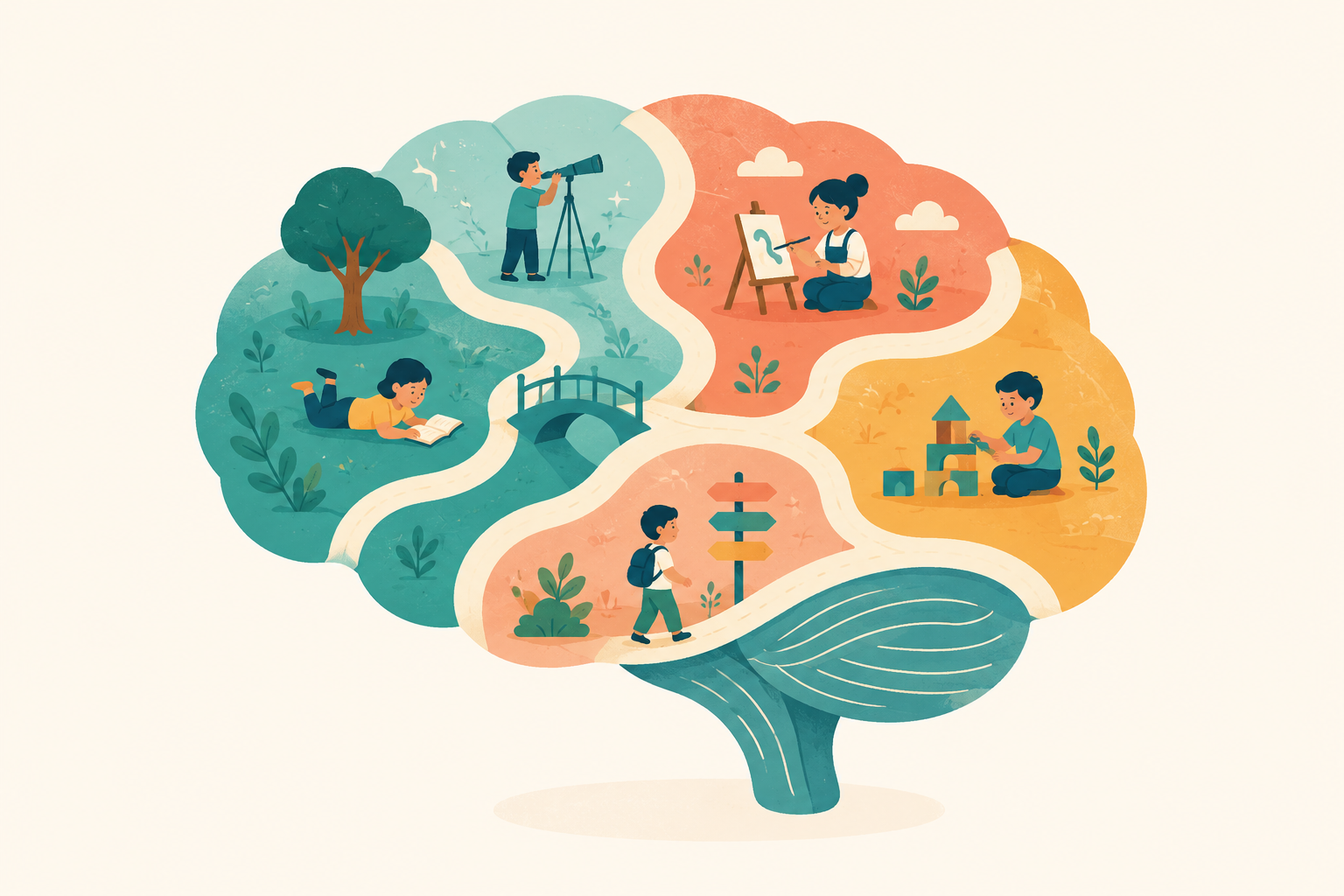
But what if we paused before placing a label on the behaviour?
What if, instead of asking, “Why is this child behaving this way?” we asked, “What could this child be trying to communicate?”
Autism is not the absence of a voice. Sometimes, it is the presence of a language we have not yet identified and understood — which is the heart of autism awareness in Pakistan today.
Signs of Autism and Sensory Processing in Children
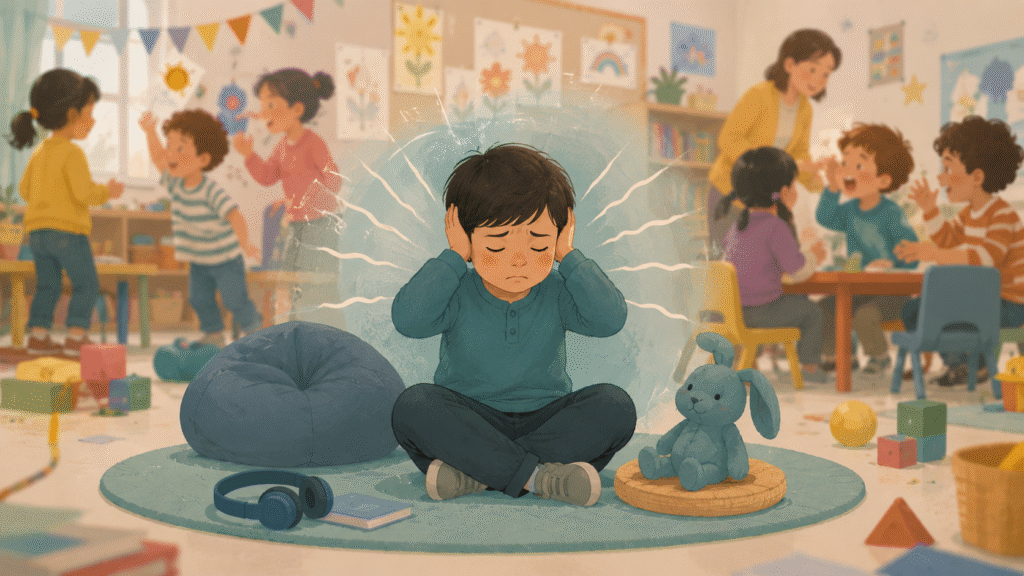
A child attempting to cover their ears in a boisterous classroom may not be misbehaving; they may be overwhelmed by sensory input. A child who repeats the same phrase may be using familiar words to regulate themselves or communicate. A child who does not respond immediately to a question may need additional time to process language. A child deeply absorbed in a particular interest may not be “fixated” in the way adults assume; that interest may offer joy, predictability, and even a bridge to learning.
When observed with curiosity rather than judgement, behaviour can become a form of translation. Recognising these early signs of autism in children is often the first step toward getting the right support.
Why Early Intervention for Autism Matters

This is why early identification and informed support matter. The purpose is not to search for faults within a child, nor is it to modify their identity. The purpose is to understand their needs early enough that frustration does not become their primary language.
Parents are often the primary viewers of their child’s story. They notice the details others may overlook: the habits that cannot change, the sounds that cause distress, the unusual intensity of an interest, or the difference between how their child interacts at home and in unfamiliar settings. These observations should not be considered insignificant — they can be important pieces of a much larger picture, and a valuable starting point for a professional psychological assessment.
Building an Inclusive Classroom for Neurodivergent Children
Schools too, tend to hold enormous power. A classroom can either become a place where a neurodivergent child is repeatedly reminded of their differences, or a space where those differences are understood and supported. Inclusion is not simply allowing a child to sit in the same classroom as everyone else. It is asking whether the classroom has made room for that child to learn, communicate, and belong.
How Parents Can Support a Neurodivergent Child in Pakistan
Perhaps the greatest shift we can make in awareness is a simple one: moving from correction to curiosity and acceptance.
Before we proceed to lay our harsh judgements over a child, we can attempt to understand the psychological impact of our behaviour towards them. Before assuming disinterest, we can consider a different form of engagement. Before writing a child’s future based on a diagnosis, we can remember that no diagnosis is capable of defining an entire human life.
The child was never without a language. Perhaps we were simply too stuck in our own ways of living and thinking.
Get Support at The First Hope Center

If you recognise any of these signs in your child, you don’t have to navigate them alone. The First Hope Center offers psychological and neuropsychological assessments, speech and language therapy, and group and behaviour therapy for neurodivergent children in Lahore — helping families move from uncertainty to a clear, actionable path forward.